
Showing posts with label Trouble. Show all posts
Showing posts with label Trouble. Show all posts
Wednesday, October 5, 2011
The Goal

Wednesday, August 17, 2011
Facing Opposition

Wednesday, July 6, 2011
In Times of Trouble

The Scripture further says we are to be genuinely concerned about the suffering of others (1 Corinthians 12:26,27; Romans 12:15; Galatians 6:2). This is hard because when you sympathize with others, you end up hurting with them. It seems easier (if less Scriptural) to keep them at arm's length. One way to do this is to just spout platitudes (it is unfortunately possible to turn Scripture into a platitude) to avoid actually becoming engaged in people's problems. There has been much said about listening versus speaking. I believe there can a place for speaking, but it is hard to be really concerned unless you listen. There has also been much said about whether or not to quote Bible verses. I also believe there is a place to use Bible verses, but not as a quick answer to avoid listening to and sympathizing with the person. Bible verses thoughtlessly quoted to a hurting person can come off as condemning rather then comforting. (As saying, surely you should have already known this.) But the main issue starts with the heart. If you are genuinely concerned with the person and their pain, it will help keep you away from pitfalls.
Wednesday, May 11, 2011
Is God Behind Catastrophes

The Scriptural answer is that we live in a fallen world that is under the judgment of God (Romans 8:18-23; Revelation 21:1-5; Genesis 3:16-19). Now this does not mean that those who suffer calamity are greater sinners then those who do not (John 9:1-3); we are to realize that we are just as worthy of judgment as they are (Luke 13:1-5). We are all sinners (Romans 3:23; Isaiah 64:6; Jeremiah 17:9), worthy of God's wrath (Romans 1:18; Ephesians 2:1-3; Revelation 20:11-15). But God is gracious, bestowing on us good things in spite of our rebellion against Him (Matthew 5:45; Acts 14:17; James 1:17) that we might be brought to repentance (Romans 2:4). But nonetheless, in a fallen world there will be exhibitions of God's judgment of sin. Now this does not negate the need to have compassion on those who are suffering. God calls us to consider the poor and afflicted (Psalms 12:5; Luke 1:51-53; James 5:1-6) and has acted to save us while we were His enemies (Romans 5:6-8; Colossians 2:13,14; 1 Peter 2:24,25). So I do not want in any way to advocate indifference to the pain of those who are suffering. But we should not ascribe helplessness to God.
Wednesday, March 16, 2011
Do Not Be Surprised

Wednesday, January 26, 2011
Calvinism and Stoicism (And Why They Are Not the Same Thing)

Quite the opposite. Scripture teaches us that God sends adversity so we may learn we cannot handle it ourselves, but must trust God through it (Proverbs 3:5,6; Psalms 46:1-11; Isaiah 40:29-31). These two approaches can end up having the opposite effects. The correct approach leads to humility, and the opposite can build pride, which is a real spiritual danger (Proverbs 16:18; Luke 14:7-11; 1 John 2:16). Yet I know for myself how easy it can be to slip from trusting God to trusting in myself and my inner strength. Let us watch ourselves in this regard.
It is easy to get two similar ideas confused, but in this case we need to be clear on the difference. The difference is the fall and redemption. The Stoic believes the world is how God intended it to be and we need to be tough to fit in to it. The Bible says the world is a fallen one in rebellion against God and we, as part of it, are sinners (Romans 8:19-23; 1 John 2:15-17; Isaiah 64:6) and God has rescued us from it (Romans 5:6-8; 1 Peter 2:24-25; 2 Corinthians 5:21). So we must trust the One who has rescued us from sin and death to bring us through the difficulties of life (Philippians 4:6,7; Matthew 6:33; Romans 8:18). This makes a fundamental difference in how we look at the trials we face.
Wednesday, December 8, 2010
Christian Malpractice

The Bible says we should expect trouble (John 16:33; Acts 14:22; 2 Corinthians 1:4-7) and opposition (2 Timothy 3:12; John 15:18-21; 16:1-4). The Christian life is pictured as a battle (Ephesians 6:10-13; 2 Timothy 2:3.4; 1 Timothy 6:12) and an athletic contest (Hebrews 12:1-3; 1 Corinthians 9:24-27; 2 Timothy 2:5). Now we are able to put these things in perspective because we know what our ultimate goal will be (2 Corinthians 4:17,18; Romans 8:18; Revelation 21:4) and know God is using the trials we go through to make us into the people that God wants us to be (James 1:2-4; Romans 5:3-5; 8:28,29). As Christians, we have reason to rejoice (John 15:11) in who God is (Philippians 4:4), in our hope of salvation (Romans 5:2; 12:12; Philippians 3:3), in the fact God hears our prayers (John 16:24), and even in our suffering for Christ's sake (Matthew 5:12; Acts 5:41). But all this, as I said, is a matter of perspective. To sell Jesus by the Madison Avenue method is to set both you and your converts up for failure. You may show superficial success, but you will not be doing what God has genuinely called you to do. And you will be in danger of producing disciples like the seed that falls on rocky soil and sprouts up quickly but withers at the first sign of trouble (Mark 4:16,17).
Wednesday, October 13, 2010
The Victory Parade
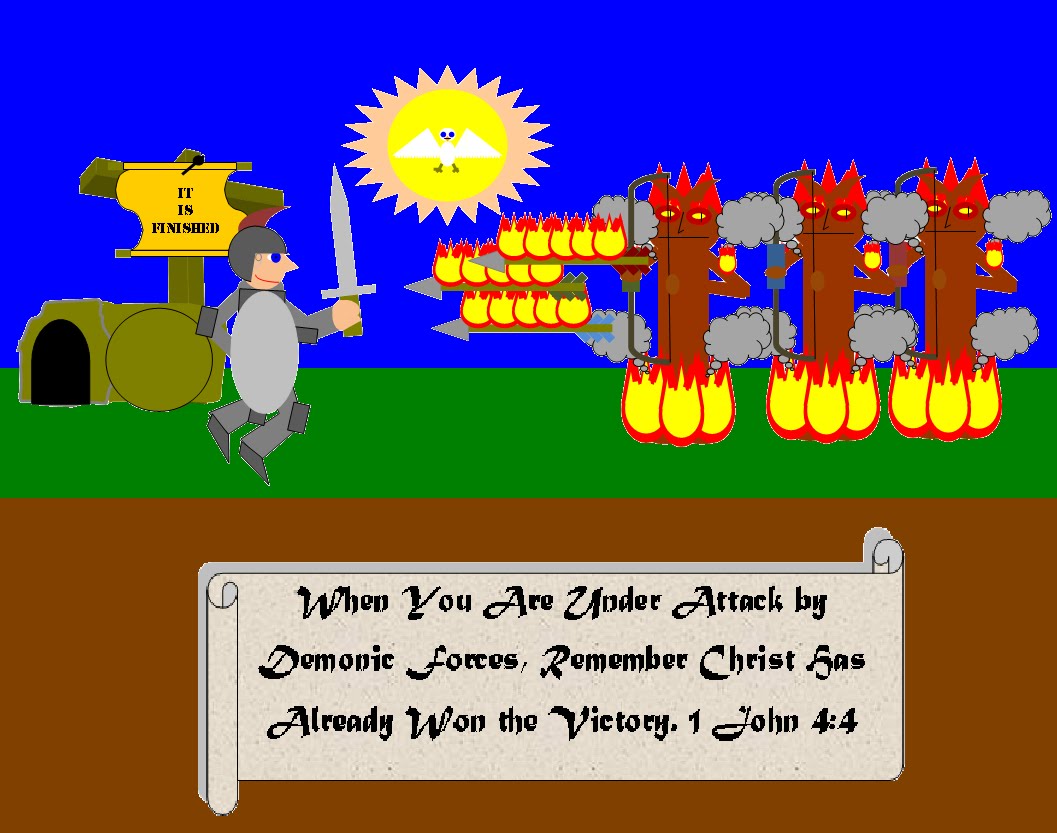 Scripture speaks of our being always led in the triumph in Christ Jesus (2 Corinthians 2:14). There is an aspect of this that it is easy to miss, given just the English translation. The word "triumph" is a reference to a specific Roman custom. When a Roman general won a great victory he was awarded a triumph. This was a procession through Rome followed by his soldiers. With him would be the best of the spoil and the most illustrious of his prisoners. He and his soldiers, who would be amply rewarded from the spoil, would be admired and cheered by the crowd as they marched through the city. In the same way, Christ has already conquered sin and death (John 16:33; 1 Corinthians 15:54-57), and we who have faith in Christ are victorious with Him (1 John 5:4). He has overcome and disarmed His enemies, leading them in the triumph (Colossians 2:15), and provides gifts to His followers (Ephesians 4:7,8). Therefore, we are already in the victory parade.
Why, then, does it sometimes not feel and look like this to us? I would submit that while we are overwhelming conquerors (Romans 8:35-37), this is from God's perspective and is in spite of the various trials mentioned in the passage. God causes all things to work together for good (Romans 8:28), but we often do not see them doing so at the present time. Nonetheless, we can trust God that, though we may not see it, we are victorious. And we should live our lives in view of the fact we have already won and are in the victory parade.
Wednesday, August 4, 2010
I Cannot Take It Any More.
 "I just can't take this any more." Have you ever told God that? And has it ever not gone away? I have been there, and God has brought me through. But He did not take the problem away. Romans 8:28 unfortunately has become a cliche. Something that rolls off the tongue of those who do not want to take the time to care. But it holds an important truth: that while God is in control of our lives, His goal is not to make us happy but to conform us to the image of Christ (Romans 8:29,30).
Now pressing this home to a person undergoing great suffering may not be the best strategy. (I know you are miserable now, but just think of how much better a person this is going to make you.) But on sober reflection, this is a helpful perspective. If we see the basic focus of our life as us and God as someone who is there to make us happy, every problem and setback seems enormous. But if we understand that we belong to Another (1 Corinthians 6:20; 2 Timothy 2:3,4) and our job is to carry out His purposes in this world (Ephesians 2:10; 2 Corinthians 3:4-6), then we will look at our difficulties with a different set of eyes. This will not take the pain away when we are in a position where we feel we cannot take it anymore. But in the long run it will help us see our troubles as part of the plan of the One who controls all things (Ephesians 1:11).
Subscribe to:
Posts (Atom)